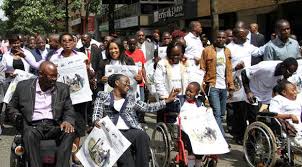
The National Gender and Equality Commission (NGEC) has marked the International Day of Persons with Disabilities by calling for stronger enforcement of disability rights across Kenya.
Citing persistent barriers in education, employment, health and justice, the Commission urged national and county governments, the private sector and communities to accelerate implementation of the Persons with Disabilities Act, 2025 and advance inclusive development.
In a statement released on Wednesday, the Commission said the 2025 theme, “Fostering disability-inclusive societies for advancing social progress,” challenges nations to dismantle legal, institutional, physical, digital and attitudinal barriers that continue to exclude persons with disabilities.
NGEC noted that Kenya has made significant steps in strengthening disability inclusion, citing constitutional protections and recent legislative reforms.
“The Constitution of Kenya, particularly Article 54, guarantees the rights of persons with disabilities and obligates the State to take legislative, policy and administrative measures to actualize these rights,” the Commission said.
It added that the enactment of the Persons with Disabilities Act, 2025 marks a major milestone, modernizing the legal framework and aligning it with global and regional standards, including the UN Convention on the Rights of Persons with Disabilities.
According to the Commission, the new law introduces expanded provisions on inclusive education, accessible infrastructure, reasonable accommodation, participation and institutional accountability across national and county governments.
However, NGEC said that despite this progress, “many persons with disabilities in Kenya face predictable systemic barriers that restrict access to education, employment, health services, justice, and participation in leadership and decision-making.”
The statement highlighted the vulnerability of children with disabilities, noting that many are excluded from schooling due to inaccessible facilities, lack of assistive devices, insufficient specialized teachers and persistent stigma.
Adults with disabilities, the Commission said, continue to face multiple discrimination in the labour market, limited mobility and inaccessibility to services.
Women and girls with disabilities remain disproportionately exposed to “violence, harmful practices, exploitation and neglect, often with limited access to justice or protection services.” NGEC warned that these barriers undermine national efforts to achieve meaningful and inclusive development.
The Commission acknowledged ongoing initiatives by ministries, state agencies, county governments and organizations representing persons with disabilities.
These include investments in accessibility, inclusive education, social protection and representation.
However, NGEC emphasized that “the lived realities of many persons with disabilities reveals gaps in the implementation, particularly in the enforcement of accessibility standards, affirmative resource allocation, generation of disability-disaggregated data, and indeed the full compliance with principles of equality and non-discrimination.”
Calling for coordinated, multisectoral action, the Commission outlined specific responsibilities for key actors.
It urged the National Government to fully operationalize the Persons with Disabilities Act, 2025 through regulations, adequate resourcing and enforcement of accessibility and non-discrimination provisions.
It also emphasized the need to mainstream disability inclusion in all sector policies, including education, health, housing, transport, justice, digitization and green transitions.
For County Governments, NGEC called for integration of disability inclusion in County Annual Development Plans, establishment and funding of disability units, investment in accessible infrastructure and community-based rehabilitation, and closer collaboration with organizations of persons with disabilities to address local barriers.
The public and private sectors were urged to comply with employment quotas, adopt inclusive recruitment practices, provide reasonable accommodation and ensure accessible services and digital platforms.
Development partners and civil society organizations were encouraged to support disability-inclusive programming, strengthen organizations of persons with disabilities and invest in data-driven interventions.
NGEC also appealed to communities, media and families to challenge stigma and harmful beliefs, protect children and adults with disabilities from violence and neglect, and promote dignity, participation and equal treatment.
The Commission reaffirmed its commitment to advancing disability rights under the banner “Equality for All.”































Comments
Sign in with Google to comment, reply, and like comments.
Continue with Google